- size
- 1.4 mm
- vel
- 62 mm/s
- cov
- 34 %
- out
- → PLC
We instrument the process
A camera over the surface. A number in your PLC. The measurement is made on the device, on site, and written to the Modbus registers your control system already reads.
Watch the 90-second explainer →If this is your plant
The variables that decide a process are the ones nobody could measure in real time. We measure them on the plant floor and hand the number to the control system that already runs the plant.
- Foam carries product over the lip, and the loss shows up in the yield, not on a screen.
- A tank foams over on the night shift and nobody saw it coming.
- A surface judged by eye, so it is run differently by every operator.
- A froth camera that came pre-trained on someone else’s cell, and reagent dosed by habit.

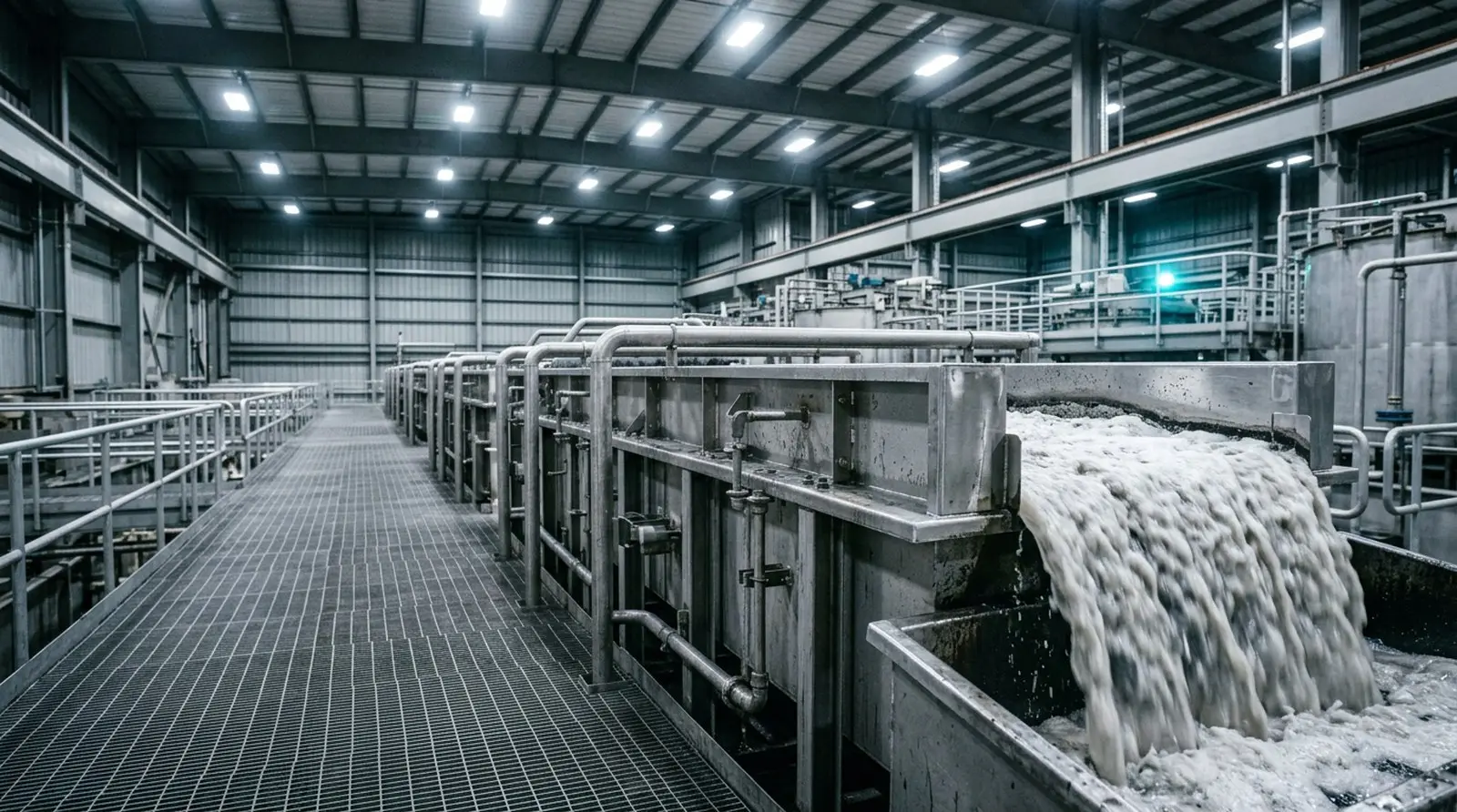
Flotation froth
X FLOAT · ROUGHER LAUNDER
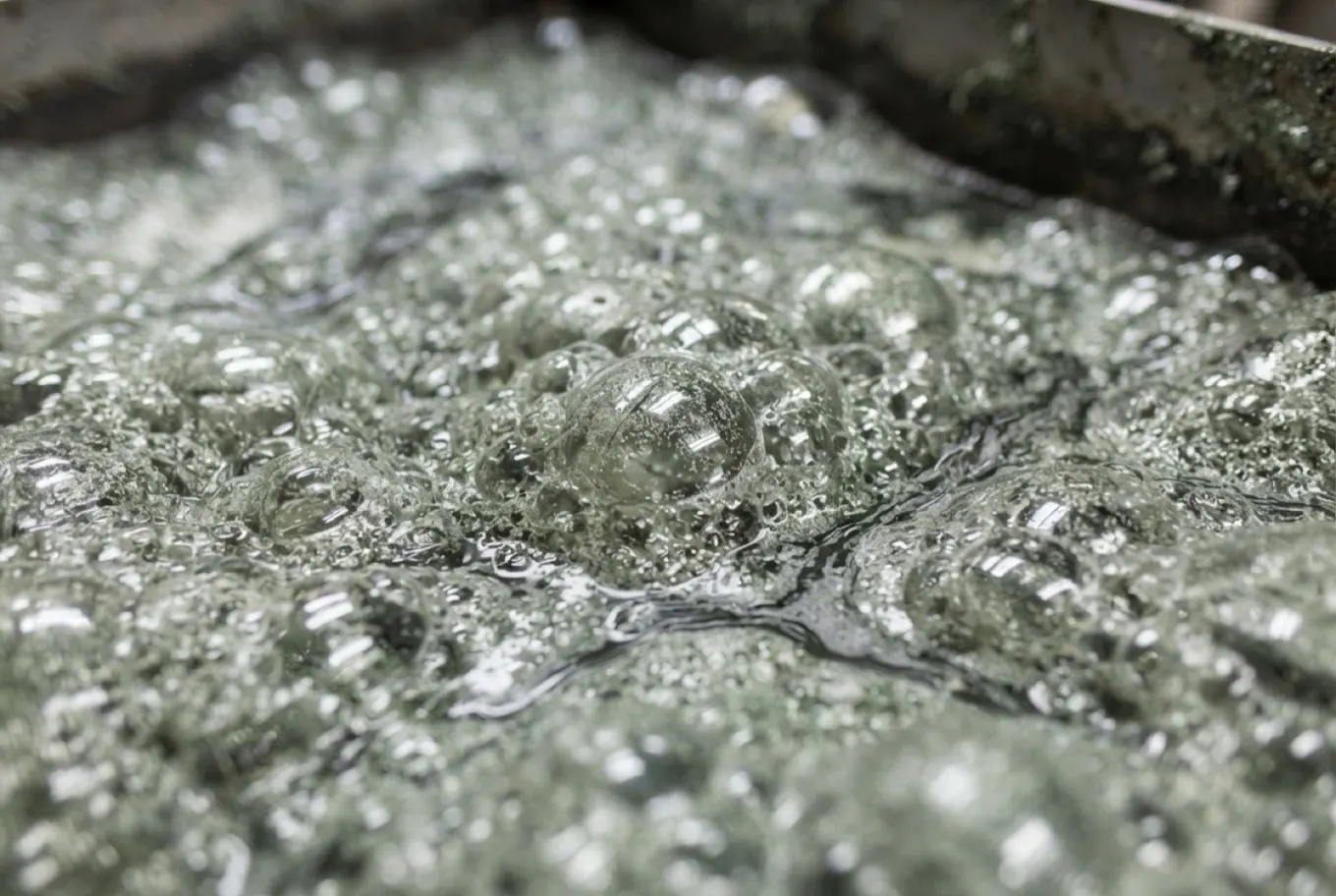
X Float reads bubble size, velocity, stability, texture and depth, more than a dozen numbers, and the model is trained on the cell it looks at.
- Bubble size
- 1.4 mm
- Surface coverage
- 34 %
- Froth velocity
- 62 mm/s
- Process state
- OPTIMAL
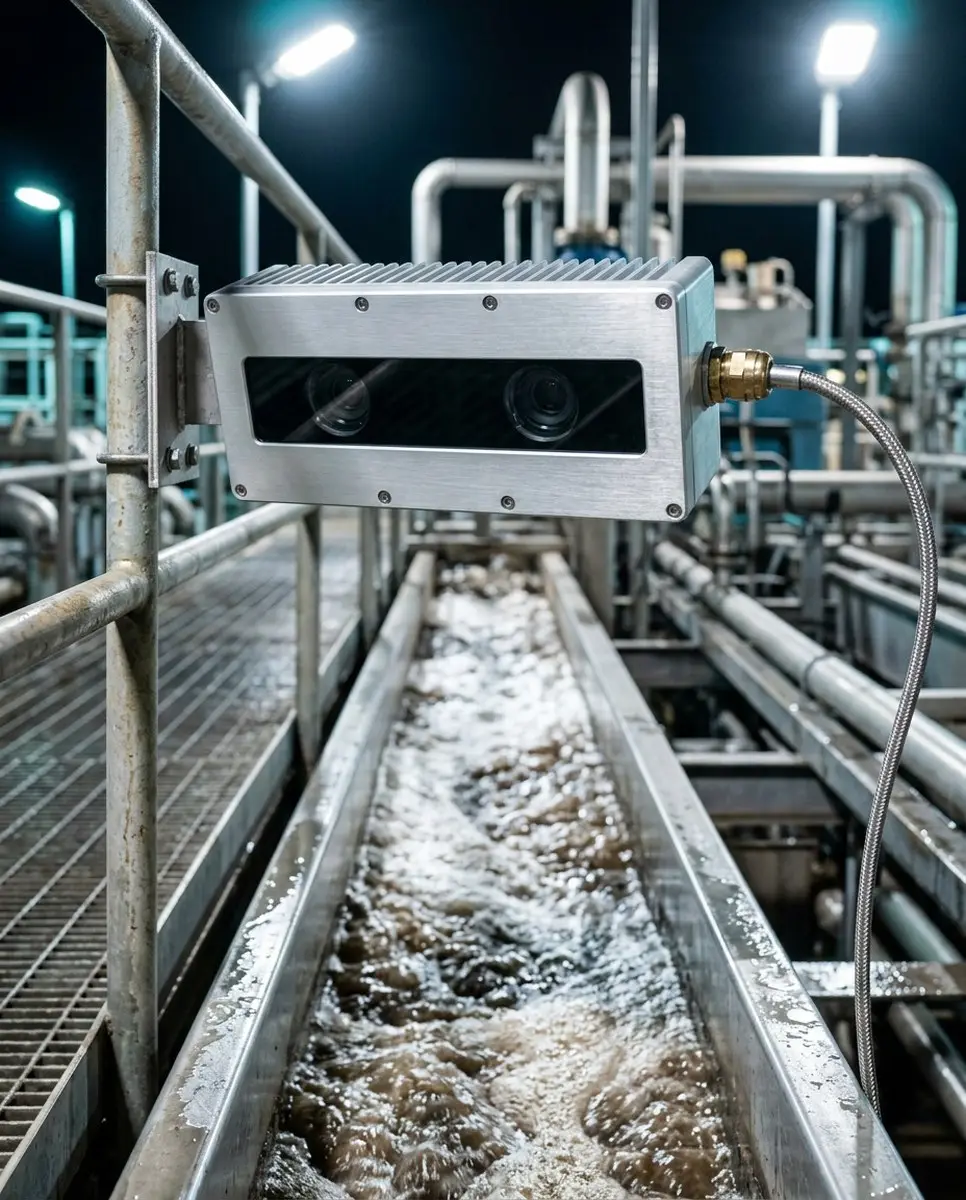

Process foam
X FOAM · AERATION TANK
A camera over the tank that measures foam coverage and its distance to the lip, and reports whether the foam is rising. An antifoam dose is advised alongside; your PLC keeps every interlock.
- Surface coverage
- 61 %
- Edge proximity
- 40 mm
- Trend
- RISING
- Process state
- WATCH
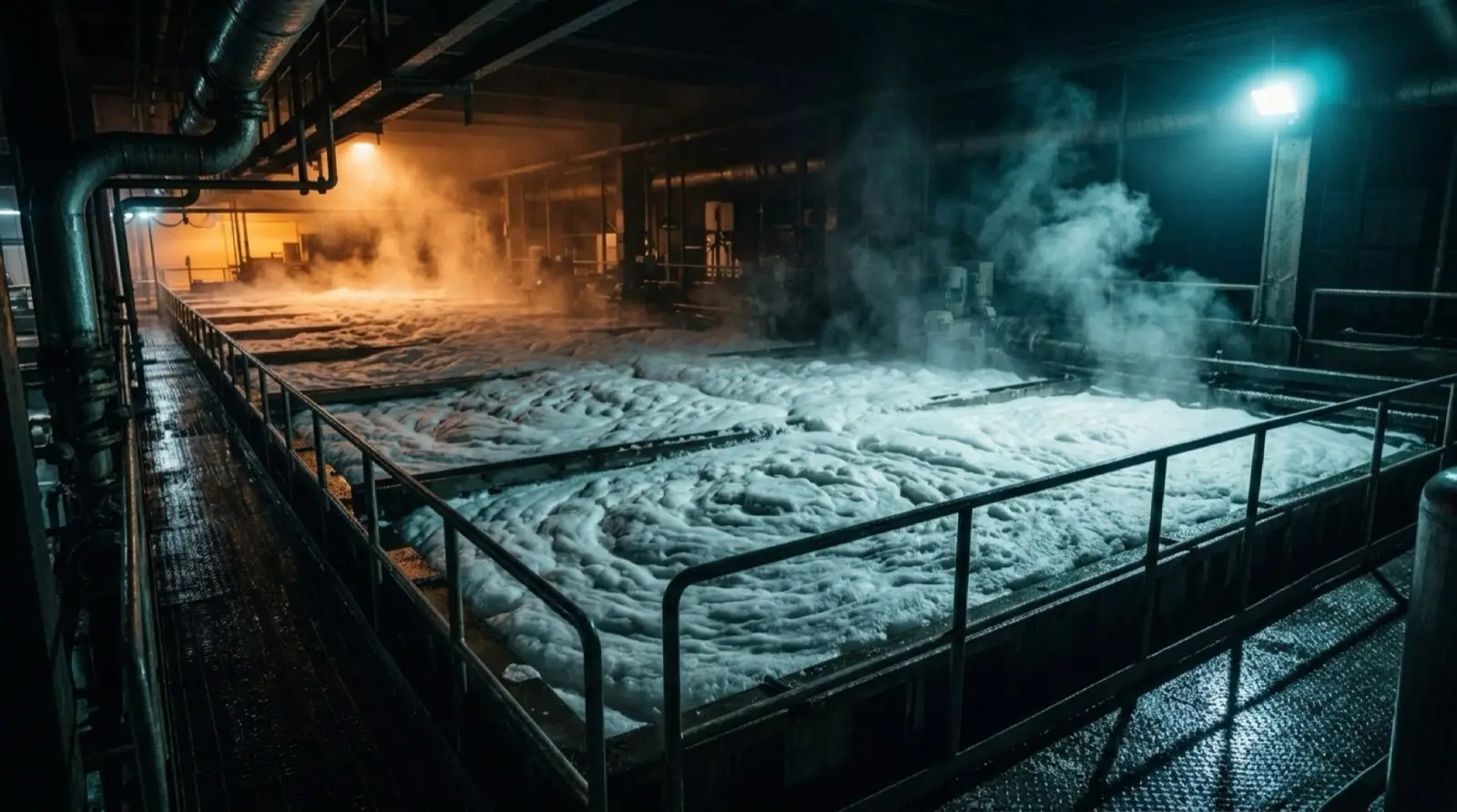

Paper-mill stock
X FOAM · HEADBOX APPROACH
Fine entrained foam on pulp stock is the same measurement on a different material: how much of the surface it covers and how fine it is, and which way each is heading.
- Surface coverage
- 78 %
- Foam fineness
- 0.8 mm
- Trend
- STEADY
- Process state
- NOMINAL
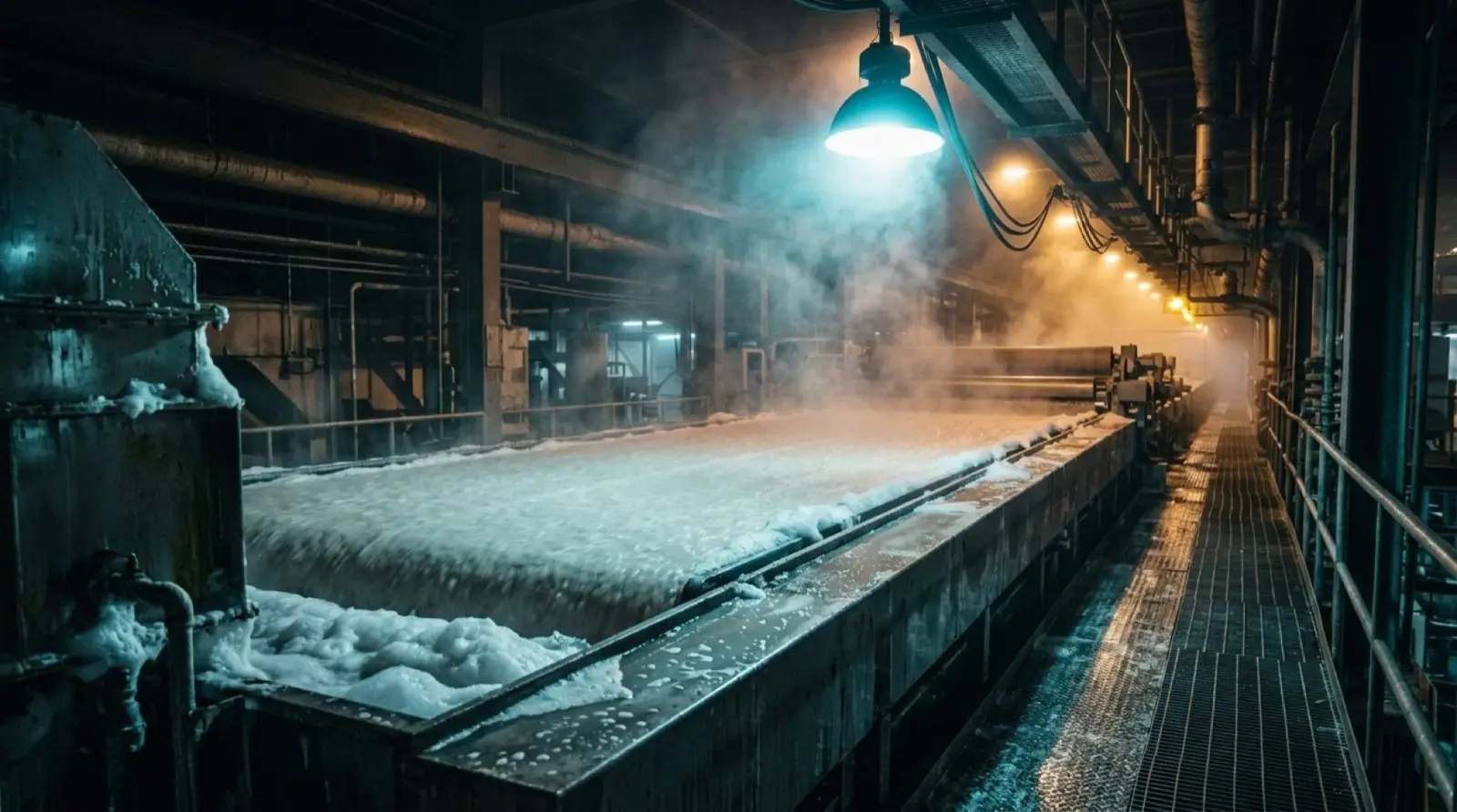
What changes on the plant
A measurement is only worth having if it changes a decision. These are the ones it changes.
| The number | The decision it allows | What changes |
|---|---|---|
| Foam coverage and distance to the lip | Dose while there is still headroom above the foam | The product stays in the tank. The clean-up and the report that follows it do not happen. |
| Foam trend and the advisory dose | Dose to what the foam is actually doing | Less antifoam bought, and less of it carried downstream. Around 50% lower antifoam use, modelled on the trial tank. |
| Bubble size, froth velocity, stability and process state | Hold the froth in the regime the metallurgist asked for, on every shift | The same froth at 3am as at handover. +1% recovery ≈ A$788k/yr, modelled on a 2 Mt/a concentrator. |
| Process state, written continuously | See the drift before the batch is off spec | Fewer batches that come out different from the last one. |
| A breach flagged at data entry | Fix it before the utility invoices you for it | A compliance number you can defend, and a utility invoice you can check. |
Ninety seconds, start to finish
The same case this page makes, in the order it happens on a plant.
It behaves like a level transmitter
The measurement lands where every other plant signal lands. Your PLC reads another register and decides what to do with it. There is nothing new for the control system to learn and nothing new for IT to approve.
Surface → Camera → On-device inference → Holding register → Your PLC
No cloud. No GPU rack.
The full signal path, and what a commissioning needs from your site
| Measures | The physical state of the surface an operator judges by eye, as continuous numbers |
|---|---|
| Output | Modbus TCP holding registers (4–20 mA optional) |
| Update rate | Continuous |
| Compute | On-device at the edge; no cloud, no GPU rack |
| Network | Power and a network drop; offline-capable, nothing leaves site |
| Mounting | Self-contained camera, fixed over the launder or tank |
| Install | Minutes to mount, hours to commission, no process shutdown |
| Maintenance | None in normal operation; the camera unbolts and moves to another cell or tank |
| The PLC sees | One more holding register, read like a level transmitter |
- What does an X Vision instrument measure?
- The surface an operator watches by eye, froth in a flotation cell or foam on a process tank, turned into continuous numbers. X Float alone reports over a dozen physical characteristics of the froth, among them how big the bubbles are, how fast the froth is moving, how stable it is, and which operating regime the cell is in.
- Does it need cloud connectivity?
- Not to run. Commissioning takes a few hours with one of our engineers either on site or connected remotely, to aim the camera and calibrate it against your process. After that the instrument runs on the device, on-premises, and can be left fully offline. Nothing leaves site.
- How does the measurement reach the control system?
- As Modbus TCP holding registers. The value turns up as a tag in the control system the way a level transmitter’s does, and the PLC decides what to do with it.
- Does installation require a shutdown?
- No. The instrument is a self-contained camera that needs only power and a network drop. It mounts over the launder or tank in minutes and commissions in hours, with no process shutdown. There is no sampling rig to build, no routine maintenance in normal operation, and the camera can be unbolted and moved to another cell or tank.
- Does X Float use AI?
- Yes, where measurement alone does not reach. Most of what the instruments report is measured from the picture, so a number can be checked against the frame it came from, and the learned parts are trained on your own site rather than someone else's. How that is built is in the specification your integrator gets.
Three lines, one company
Pick the surface you have trouble with. Two edge-vision instruments that share a camera-to-Modbus path, and a software division that replaces the compliance spreadsheet.
X Float
EDGE-VISION INSTRUMENTContinuous froth analysis for flotation control. Trained on your cell, not shipped with the box. Grade is offered only as a site-calibrated correlation.
DetailsX Foam
EDGE-VISION INSTRUMENTFoam monitoring for water and process tanks, with advisory antifoam dosing. Around 50% lower antifoam use, modelled on the trial tank and specific to it.
DetailsIndustrial Data Systems
SOFTWARE DIVISIONTrade-waste compliance and billing you can defend. Catches breaches at data entry rather than at month-end, and reconciles the utility invoice against an independent estimate.
DetailsRunning tonight
Where the instruments are running on real plant. We do not name customers, so each line gives the sector, the place and what the system does there.
The metallurgist reads bubble size and process state in the same HMI as the level transmitters.
Coverage is on the shift’s screens long before the foam is near the lip, so the first warning is a number and not a phone call from the floor.
Designed, built and supported in Australia.
Two instruments on live sites, both writing to the plant PLC.
Patent pending on the instrumentation (Australian application filed December 2025).
The food plant has both X Vision systems on site: the X Foam instrument on trial on its tanks, and Industrial Data Systems on its trade-waste compliance. Register values shown on this page are representative of the measurement and are not readings from a customer circuit.
Hardest
Measurement